Principle Two: Intention | Moving Toward Something Truer
Tattoo Pathway
April 13, 2026
Intention seems obvious at first.
Of course there is an intention behind getting tattooed. Of course there is a reason. But in practice, intention is one of the most overlooked parts of the whole process. It often gets flattened down into aesthetic preference, or some surface-level motivation, one quick pass on the why before moving ahead.
And yes, at its most basic, intention is the why. It is the reason you are going to get a marking. The reason, or the decision, to be tattooed.
But it is also more than that.
There are unseen forces moving through the process as well. A kind of charge. A current that runs between the person giving the tattoo and the person receiving it, with intention sitting at the centre between them. This is what I call the circuit. And when that charge is clean, when it is aligned, something happens that is hard to reduce to technique or design alone. There is a reciprocity of connection, of clarity, and of something that feels real, good, and true.
To act with intention is to bring your mind fully into the moment. It is to become so focused on the action and the outcome of the tattoo that the noise around it begins to fall away. The moment gets held differently. Honoured differently. The reason the person is there comes into sharper view. And from that place, the experience can begin to draw in what it needs. It can become transformational rather than merely procedural.
When people reflect honestly on their tattoo journey, especially the early stages of it, they can usually see that intention has not been constant. Some experiences were held with care. Some carried weight. Some had a quality of sacredness to them, even if that was never named directly. Others were impulsive, fractured, disjointed. Some were dissociative. And for plenty of people, some tattoo experiences were manipulative or even abusive. That has to be part of the conversation too.
Because every tattoo still carries an intention.
Even if it was unconscious.
Even if it was unclear.
Even if it was misaligned.
Even if it was imposed.
Even if the aim behind it was poor.
There was still an intention there.
That is why this principle follows relationships. Once you begin to understand your relationship to tattooing, to your tattoos, to the people involved, the next question is obvious: why are you doing this?
That question needs more care than most people give it.
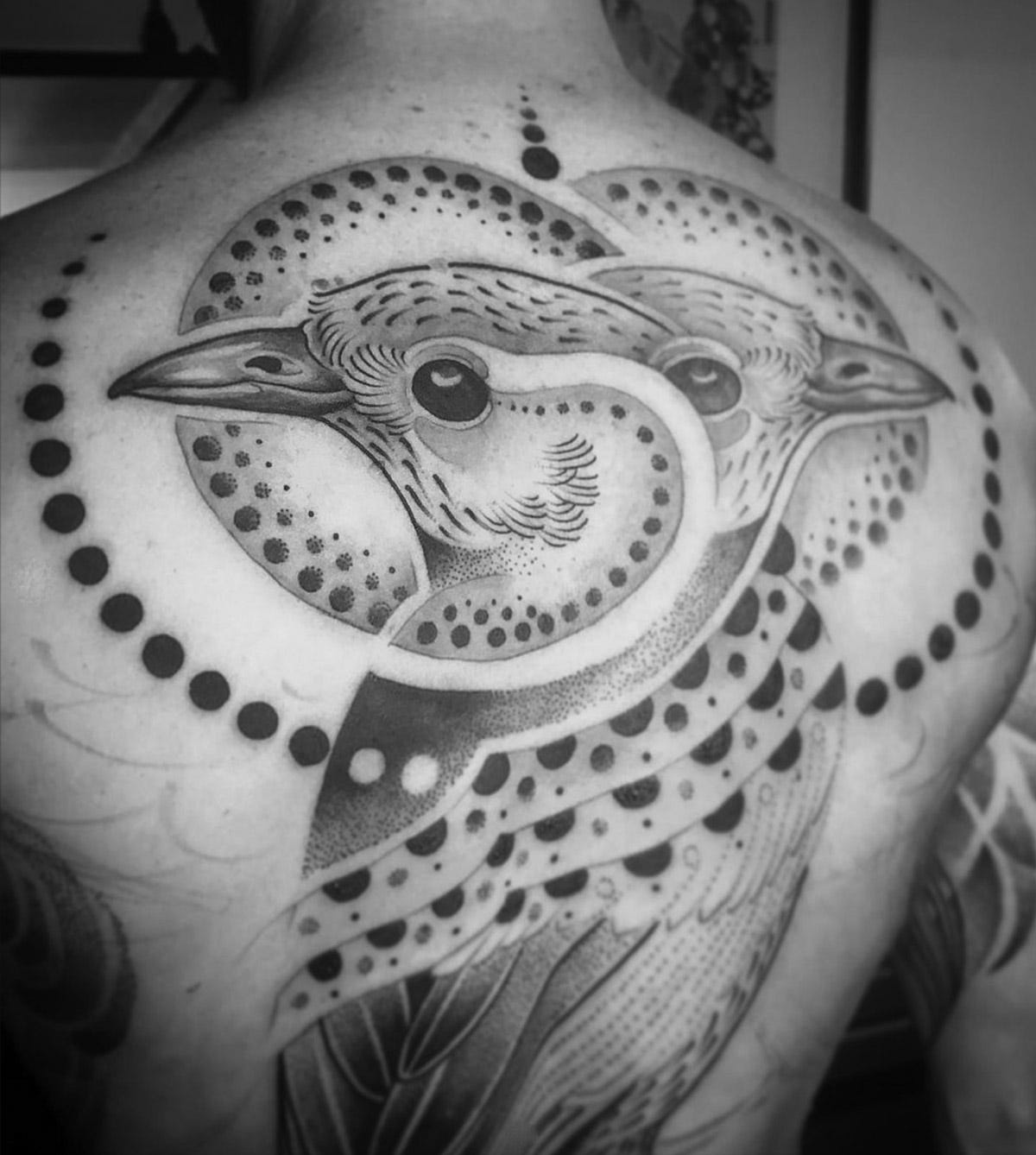
More than a decorative mark
Within Tattoo Pathway, the aim is not to force people into a rigid sequence, but to create a structure where they can move through their tattoo journey with more safety, more buoyancy, and more self-awareness. The point is not simply to receive tattoos as decorative marks, or as something handed over by someone else and worn on the body. The point is for the process to become meaningful and integrated, so that what is being marked actually relates to who you are and who you are becoming.
That kind of process requires ownership.
It means looking at the whole thing as one whole thing. Not just the design. Not just the artist. Not just the moment of tattooing. But the deeper movement underneath it all.
People often ask where they should start. What order they should follow. What progression I recommend. And I can make suggestions, but I do not think there is one universal sequence that fits everyone. I have seen people move through this work in all sorts of ways, for all sorts of reasons. So more and more, my intention has become to pay attention.
That is part of what intention becomes when it is cultivated. It becomes a guide.
Not a slogan. Not a concept. A guide.
Mistaking movement for progress
Without that kind of cultivation, people can easily mistake movement for progress.
They can assume that because they are getting tattooed, something meaningful is happening. And sometimes it is. But sometimes the tattoo is simply reinforcing a version of self that has not been examined properly. It can confirm a current identity, or validate a story about who someone is, without ever asking whether that story is true, or whether it is the one they actually want to keep living from.
This is one of the ways people get stuck.
I see it all the time. A kind of looping.
Without guidance, intention can collapse inward. It turns toward self-validation, self-expression, self-idealisation. And while there is nothing inherently wrong with looking inward, it is natural and necessary at certain stages, it can also become distorted. A person can become too absorbed in themselves. Too curated. Too identified with the image they are building. At its worst, that process becomes self-deception. The person can no longer clearly tell the difference between who they are and who they think they are.
And the tattoos begin to reflect that confusion.
They stop being true. They become projections. Advertisements.
That is why intention cannot just be about what you want to express. It has to involve some deeper honesty than that.
Moving toward something truer
The Tattoo Pathway asks people to move beyond the self, or at least beyond the small, constructed version of self that has been built out of programming, fear, approval, and culture. It asks whether there is an intention available that reaches outside self-interest and ego and connects to something more.
Paradoxically, that requires a greater degree of self-responsibility, not less.
It requires the willingness to see yourself clearly. To recognise the parts of your identity that are inherited, performed, compensatory, or simply no longer true. And then, if necessary, to let some of that go.
That kind of letting go is a form of self-sacrifice, though not in the dramatic sense people usually hear that phrase. It is not about losing yourself. It is about offering up the layers that are no longer worthy of being carried forward. It is about releasing what is false so that something truer can emerge in its place.
Something higher.
Something more whole.
Something with more integrity.
That is what intention is really about.
Not just deciding what to get tattooed and why, but choosing what kind of person you are moving toward as you do it.
Reflection for Principle Two: What intention sits behind the tattoos you already have? Not one pass deep. Ask yourself more than once. What were you aiming for? What might you change as you move forward? What is your deepest truth?
Previous in the series:
Next in the series: Principle Three: The Sacred
Mark Nara is a tattoo artist, educator, and founder of Tattoo Pathway, an initiative reframing tattooing as a conscious, transformational practice.