Principle Three: The Sacred | Beyond the Everyday Tattoo
Tattoo Pathway
April 18, 2026
The sacred is that which is lifted up and elevated outside of the everyday. It is not common. It is not casual. It is something set apart.
And in many ways, tattooing used to be that.
For most people, in most nations today, tattooing is very common. It is everywhere. But being everywhere, and being common, is not necessarily the issue. There have been times in the past when tattooing held a sacred role, when it was elevated, when the perspective around it was straight, and it was still common among a people. The difference was that receiving the tattoo was not everyday. It was not high access in the same way. It was not getting tattooed whenever you want, and getting whatever you want.
So sacredness is not defined simply by how many people participate. It is defined by how they participate.
You can have high engagement and still hold something sacred. What makes it sacred is how we treat it. It is the reverence. The attention. The mystery. The secrecy. Not broadcasting everything out into the ether.
Because the sacred was never meant to be consumed in broad daylight, or understood at a glance, or mimicked by the outside world. The sacred wants to shield itself from the everyday. And that is part of why, in modern tattoo culture, even when someone comes in with good intentions, the process can still end up diluted. Not necessarily because of the person alone, but because of where it happens, how it happens, and how it is treated. It is not being lifted up by either party into the space it can belong.
And that is a two-way street.
If you want a tattoo to become something sacred, then both the person giving it and the person receiving it have to elevate the moment. They have to choose to see it that way together.
Accessibility has replaced initiation
In our current situation, accessibility has replaced initiation.
You can get anything from anyone at any time, and that ease is part of what has made tattooing common. It is the loss of threshold. The loss of discernment. The loss of the pause.
But why should we want tattooing to be sacred? Is it only because older cultures treated it that way? Why did they treat it that way in the first place?
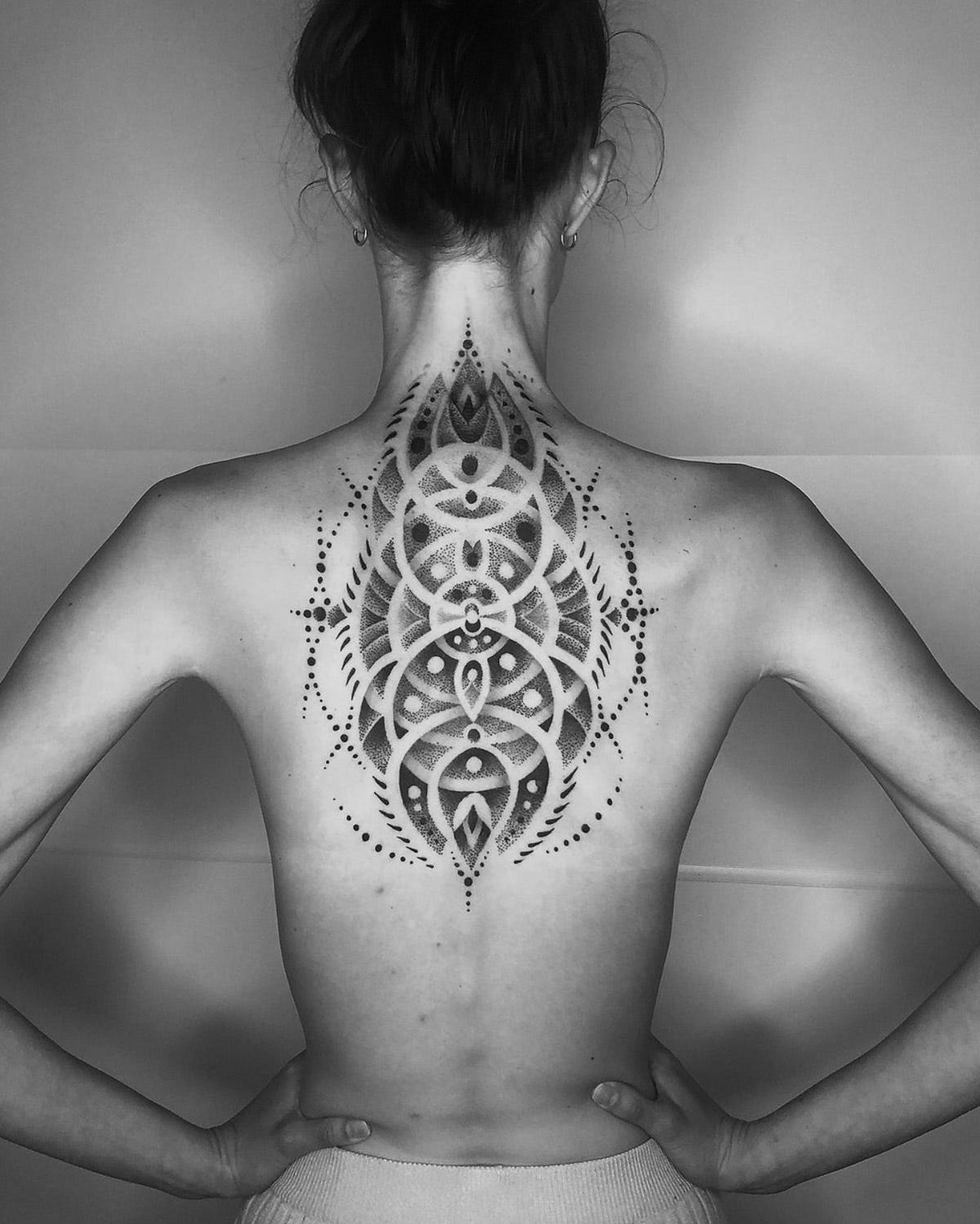
Was it because changing your appearance, changing your skin, was not a small thing?
If you think about the limitations on people’s lives and experiences in times gone past, it was a big deal to mark the skin. It was a contract. A covenant between you, your body, the unseen, and the community around you. It marked a shift in who you were. A real shift, with consequence.
From that perspective, getting tattooed, or doing tattoos with someone, required a lot of consideration, a lot of care, and a lot of caution. You were not just decorating yourself. You were entering into a relationship with something beyond you, something cosmological.
That is why tattoos were often linked with spiritual systems, cultural myths, rites of passage, birth, death, marriage, and moments that called for a connection with the divine. In many traditional societies, people were not just having what we would now call a natural experience. They were having a supernatural one. The sacred was not beyond nature either. It simply was nature. It was fully integrated. They likely would not have even used that language.
Calling on the sacred
So if your intention, like I spoke about in the last chapter, is to reach beyond yourself and to elevate the process, then what you are doing is actually calling on, and evoking, the sacred.
Or maybe, as I see quite often, people are coming into processes like this because they are already hearing the call of the sacred.
It is a two-way line.
Sometimes it is calling out, asking to be acknowledged. Other times you are the one crying out from where you are, asking, can you hear me? Can you see me? And so what opens is a dialogue with something greater.
You can call it God, the Creator, spirit, the divine, the Original Greater Power. The language matters less than the genuineness of the engagement. What matters is that you engage with it for real.
And when you do, something happens.
It is as if you connect to a larger intelligence than we can fully contain. You receive feedback. Insight. Guidance. It shapes you, sharpens you, and shows you what you could not see on your own. That is a sacred process.
Tattooing, as a formative spiritual discipline, is one where you engage with it knowing fully that it is going to change you. You expect and anticipate a formative process. You do not just hope to come out with a tattoo. You understand that you are entering something that may shape you.
And I have found, in working with people, that the presence of the sacred, shaping and showing where the tattoo is going and what something is about, becomes one of the most powerful and supportive aspects of the entire process.
The process becomes a mirror.
It becomes a map.
It becomes medicine.
It has to be experienced
That does not mean that getting tattooed, or doing tattoos, in this way is easy. The sacred is very rarely convenient, and it is not always comfortable. Sometimes it can be. There are lucky days where you feel the enjoyment of it. But what the sacred does do is make the process real. It removes illusion. It makes the experience meaningful. It anchors it in a way that aligns you with your future, not just your past.
And still, for all that can be said about it, the sacred cannot be fully explained. It has to be experienced.
You cannot simply read about it. You cannot just listen to someone talk about it. It is something you have to come to know for yourself. In your own bones.
In cultures that still hold deep wisdom, tattooing was not just about the body. It was about the soul. About the spirit. About preparation for new life, for the afterlife, for transitions, and for connection to unseen realms. There was an understanding there of the sacred pattern of being, and of becoming.
And to keep unpacking that layer a little further, I would offer this carefully. The soul has often been seen as feminine, connected to the earth, to blood, to bone, to memory, to the mother line, to genealogy, an etheric thread running through this physical river. The spirit has often been seen as masculine, connected to the heavens, to fire, to the father line, to the Creator.
So there are upper worlds and lower worlds, and there is a sacred union between them. Tattooing, when held properly, can become a bridge between those two things. The middle world. A visible dialogue between the seen and the unseen, the internal and the external.
Reflection for Principle Three: What would happen if your next tattoo was not about expressing something, but about connecting to something? What if your tattoo moved beyond the personal, and connected to the sacred?
Previous in the series:
Next in the series:
Mark Nara is a tattoo artist, educator, and founder of Tattoo Pathway, an initiative reframing tattooing as a conscious, transformational practice.