Principle Seven: Integration | The Sacred Pause
Tattoo Pathway
June 12, 2026
Integration follows naturally from the season of returning we spoke about in the last principle. It’s the sacred pause. The reflective moment between cycles. Between who you’ve been and who you’re becoming.
It’s the space in between. In between markings, in between breaths. The stillness where you receive and settle what’s been given, and allow it to take root.
What integration actually does
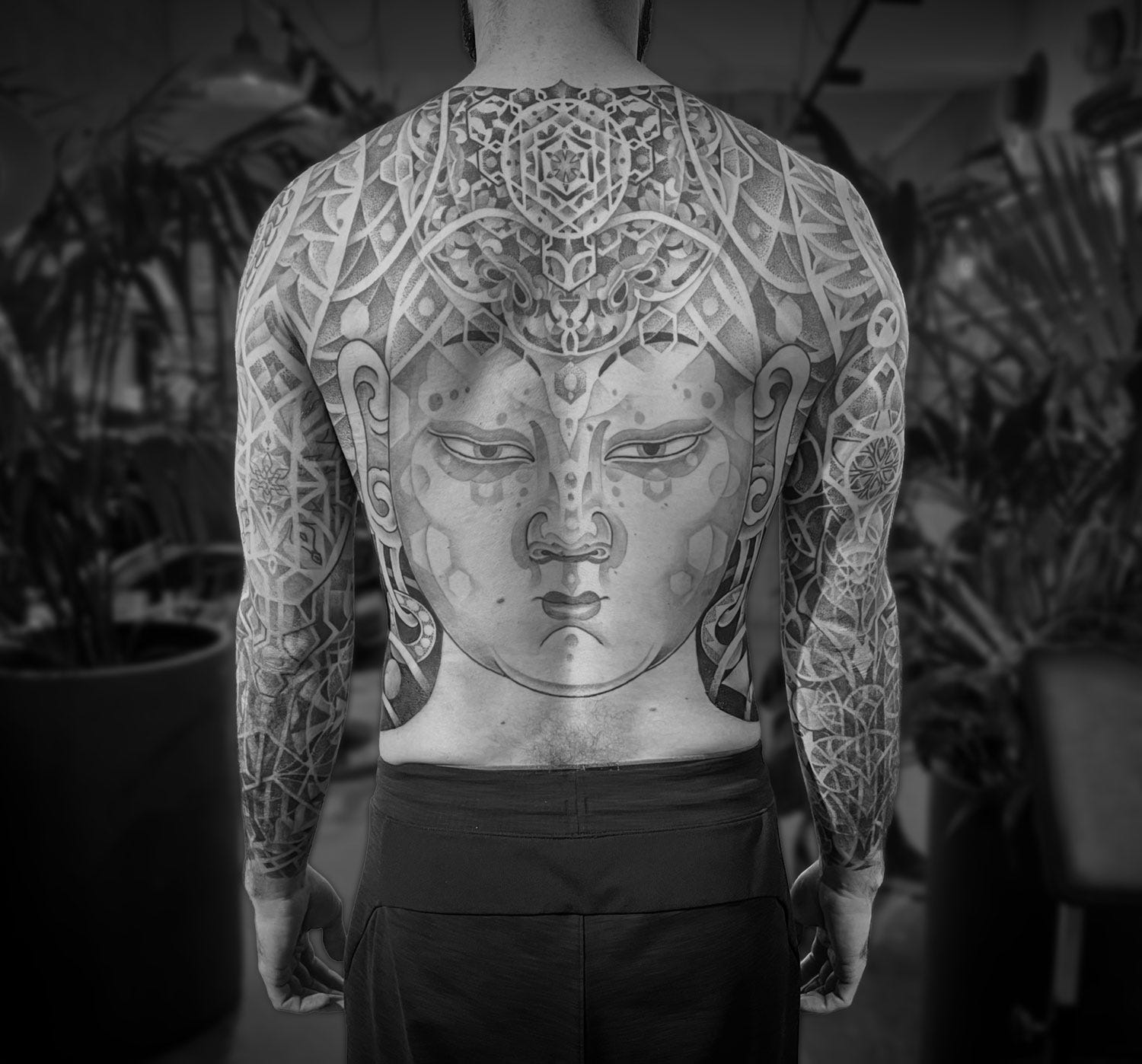
When you relate to your tattoos this way, integration allows each one to land more fully in your story. Not as decoration. Not just another chapter. But as part of your autobiographical memory, active in the transformation rather than merely marking what’s already occurred.
A well-integrated tattoo doesn’t just sit on the skin. It becomes your skin. It fits so well it can almost speak for you. It reveals truths of your story, layers of where you’ve been and what you’re carrying, that you know and actively bring to bear on where you’re going.
And when you zoom out across all seven principles, from relationships to intention to the sacred, through mapping and programs and tattoo time, and now here in integration, a shape emerges. A cycle that’s very much alive. Through time, tattooing has been more than an art form. It’s been a living, dynamic process that has offered access to something that’s intelligible but also genuinely mysterious. Something individual, but also communal. And the mind and the heart, if they’re willing, can learn to participate in that mystery and invite its hand into their story.
Integration is the deep ocean trench that’s the equal and opposite of the mountain peak. The kairos moment of contact with the sacred is one kind of experience. This is the other. And it can be overlooked.
The two traps
A lot of people rush from peak to peak, striving, seeking, getting tattooed again before the last one has settled. Some get so caught in that momentum they lose their centre entirely and it takes years to find their way back.
Others have such a hard time reaching their first peak that they resist going anywhere near another one. They avoid integration, stagnate, resist the next step, or try to go backwards and pretend they never started at all.
Integration is the middle way between those two. Movement with awareness. Not endless striving, not avoidance. Knowing how and when to walk the path, with the capacity to digest what’s been received and be nourished by each pass. Allowing the skin and the soul and the spirit all to catch up with each other.
It’s not about clinging to a past version of self. It’s not about fearing the next change either. Change is guaranteed. In many ways change is the whole point. Tattooing, like life, is about participating in that unfolding. And when they’re coupled consciously, something emergent happens.
Integration becomes witness
There’s another dimension to integration that I find quietly important. Through participating in this process and genuinely integrating it, you become capable of witnessing others. You can create space for others to change in a similar way. You can reflect their journey back to them from the vantage point of your own. You can share and hear stories. You can become a guide, a fellow pilgrim on this path, not by preaching but by living it. By actively discerning where you’ve walked and what you’re moving toward.
This is where the personal becomes communal again. The same movement that happened at the end of tattoo time.
Integration rests on all the other principles. Mapping often flows from it. Reflection becomes clearer once the dust of the climb settles and you’re in that pause. In the space between the return and the approach, you can really feel the contours of the journey. You open the bag not as a tourist looking at souvenirs, but as someone looking at the artifacts of a coherent story. A body of work. A body of becoming.
A closing word on the whole series
The Tattoo Pathway, all of the work that we’re doing here, is still unfolding. It will continue to ripple and unfurl through time. Communities, cultures, generations, different artists and guides and personal stories. Just as it has for a very long time before this moment, and long after now.
The invitation I hope comes through everything I share is this: take whatever lands with you and hold it in your hands. Whether it’s these seven principles or something else that’s been stirred up. Maybe something completely your own that you’ve accessed through listening. Hold it and feel it out. Ask: is this valuable? Does this fit? Is there a place for this, and can I use it to move forward?
To move from the just tattoo club into something more. Onto that beautifully dignified walk. The tattoo pathway.
There are many ways to engage with what we’re building here. You might already have tattoos and want to do some mapping. You might have tattoo regret and want to work through what that means and what to do with it. You might want to reach out directly to have a conversation and get some work done. It doesn’t matter where you start.
What matters is that you start with awareness. With the recognition that your tattoos are more than marks. That the process is more than a transaction. And that there’s a path available, one that’s older than any studio in this world, that can carry you through change, through initiation, through meaning, toward something true.
Reflection for Principle Seven: Are you in a season of integration right now? Have you given your last tattoo, or your last chapter, the time and space to actually settle? What might become clear if you slowed down long enough to feel the contours of where you’ve been?
This is the final post in the Seven Principles of Tattoo Philosophy series. To start from the beginning, visit:
Previous in the series:
Mark Nara is a tattoo artist, educator, and founder of Tattoo Pathway, an initiative reframing tattooing as a conscious, transformational practice.