Principle Five: Programs and Purpose | The Forces Beneath the Mark
Tattoo Pathway
May 4, 2026
Before we get to programs, we need to talk about purpose. Because programs only make sense in relation to where you’re trying to go.
Purpose
When tattoos are used intentionally, when they’re part of an ongoing process, they can act as waypoints through the chapters of your life. But they’re not just moments of expression. They’re markers of transformation, of actual change. And when that’s the case, it matters to have a clear sense of your purpose, your reason for moving through those stages in the way that you do.
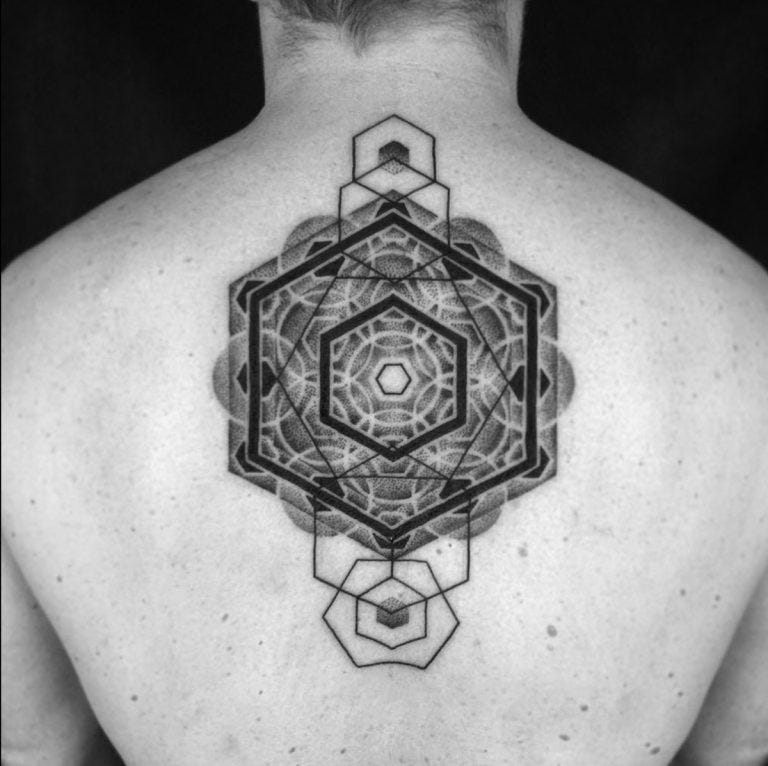
Purpose isn’t a simple idea. I’ve sat with it for a long time, heard many different teachers and thinkers reflect on it, and held those reflections up against my own. Especially in this context. Why am I tattooing people? Why am I getting tattooed? Is there something inherently meaningful in this pursuit, or do I need to allocate meaning to it?
One framework that helped me clarify this on a personal level, and that might offer you the same, has three questions at its core.
First: what do you have a natural ability for? What comes easily, even from childhood? What are you inherently good at without having to force it?
Second: what brings you genuine joy or fulfilment? What lights you up without effort? What genuinely nourishes you?
Third: can it be refined? Can this thing be sharpened with continual attention, developed over time, carried through the different seasons of your life?
When all three align, you have something that isn’t just purposeful but sustainable. Purpose with longevity. Something closer to destiny.
But purpose, when you zoom out to the longer scale, requires something more. It has to feed into something bigger than you. There needs to be a story arc you’re moving along, a quest that’s genuinely transcendent. Purpose is what links the actions you take, including getting tattooed, to that larger goal.
The central idea within Tattoo Pathway follows from this directly: in order to have a meaningful tattoo, you have to be living a meaningful life. Or framed another way, the contemporary tattoo culture asks what do you want to get tattooed? Tattoo Pathway asks what life are you living between your tattoos that deserves these markings?
That doesn’t mean having it all figured out. It means recognising that your tattoo process can actually serve your purpose, if you let it. That each mark can be a directional force, helping you move forward with stability and clarity on your quest.
Programs
If purpose is about direction, programs are about the influence on that direction.
Purpose is your sail. Your programs are the wind that fills it and the currents you’re traversing.
Programs are the unconscious patterns, the belief systems, the energetic imprints that shape who we are, often without our awareness. They live beneath the surface. Some come from trauma. Some come from culture. Many are inherited through family lines or absorbed from the social environments we grew up in. They shape our identity, our desires, our motivations. And yes, they can get encoded into the body during the tattoo process.
Unlike intention, which is conscious and articulated, programming happens in the background. It’s recorded subtly through atmosphere, emotion, timing, relationship. It’s often imprinted at the threshold of the moment, when you’re most open, most exposed, most energetically available. Usually well beyond the reach of ordinary waking awareness.
The difference is worth holding clearly. Intention is the aim. You know it, you name it, you bring it consciously to the session. Programming is the unconscious imprint, what gets seeded as a result of what’s around you and within you, energetically and emotionally, often without you knowing it at all.
You might go into a tattoo with a clear intention, marking a transition, honouring a shift. And then during the process something else arises. A deeper download. A shift in state. A transmission. When the space is held well and those earlier principles are in place, this is often the realm of the superconscious, information from beyond the self. These programs can be revelatory. They support transformation, anchor forward movement, orient you toward something true.
But if a tattoo happens without any of that, if the environment is chaotic or misaligned, if the process is dismissive or careless, then what gets recorded may not support you at all. It can hinder, suppress, distract, diminish, validate illusion. And because it’s unconscious, it can quietly influence your life without you ever tracing it back to the source.
This is why sacredness matters. Why intentional space matters. Creating that kind of container, not just physically but emotionally and energetically, invites the kinds of imprints that are actually supportive. It makes the vessel capable of holding clarity and connection to something beyond yourself.
Without that structure, the imprint is still there. It’s just not necessarily working with the essence of who you are.
That’s why curating intentional space is such a skill. It requires finesse, attention, and genuine care. Because you’re not just placing a tattoo on someone. You’re shaping a program that will stay with them, quietly informing their life from that moment forward.
Reflection for Principle Five: What was the purpose behind your tattoos? What were you aiming for, and what were you aligned with at the time? And then ask: did anything else come through? Was anything else recorded, intentionally or not? Are there programs playing out that might be worth bringing into your awareness?
Because whether you mean it or not, each tattoo is a moment of encoding. And that encoding can become a tool, when you approach it with awareness and reverence. A tool for remembering. A tool for direction. A tool for transformation.
Previous in the series:
Next in the series:
Mark Nara is a tattoo artist, educator, and founder of Tattoo Pathway, an initiative reframing tattooing as a conscious, transformational practice. He works out of themarkofnara.com.