A fresh look at intentional tattooing, lived experience, and what still holds true
Tattoo Pathway
April 8, 2026
What you’re about to read is a revisit. A reset. A fresh pass on something I put together years ago that I think is worth opening back up.
The Seven Principles of Tattoo Philosophy started as an online course. The first one I ever built around this subject of intentional tattooing. It ran several times, had a strong impact on the people who went through it, and for some of them it completely reshaped how they approached the whole thing. For others it brought something into clarity they were already sensing but couldn’t quite name. Either way, something landed.
Since then I’ve seen echoes of that work out in the world and across the industry. Different versions, different interpretations, bits and pieces showing up in different places. That’s a good thing. It means there was some pollination. But I’ve also been road testing it, implementing these concepts in real sessions with real people, tracking what worked and what didn’t, where I was dialled in and where I missed the mark. And what sits underneath Tattoo Pathway now is a much stronger framework because of that. A better vessel. More grounded.
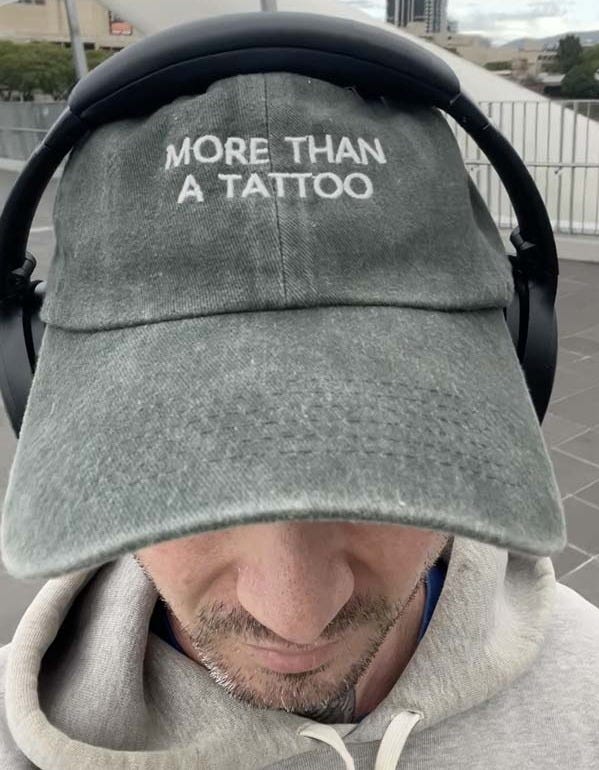
So this series isn’t the course. It’s me returning to those original ideas with fresh eyes, reading back through the material, having some conversation around it as I go, and just opening it back up at no cost for anyone that wants to follow along.
Before we get into the principles themselves, some context for anyone new here.
Nearly twenty years of this
I started tattooing the old fashioned way. Apprenticeship with a biker, scrubbing tubes, walk-in street shops. Over time I was lucky enough to develop relationships with artists who were doing work I wanted to move toward, people who inspired me and shared things with me, and eventually that unfolded into a private studio setting.
Alongside the apprenticeship I studied visual arts. So the early years were almost entirely focused on the technical side of things. Tattooing was new to me, mysterious, a little edgy, and I loved it. Coming from a street art background, it was this world I didn’t know much about but wanted to badly. And there was a particular way in. You couldn’t just start. You had to find people willing to open things up for you.
Then somewhere in my mid twenties something shifted. A wave of awareness. A pretty deep internal movement that changed how I related to my experience generally. Life became more intimate. I became more aware of things beyond me that seemed to have some kind of intelligence to them, some curation of what I was going through. A feedback loop between the world and my internal experience.
That started peeling back a lot of beliefs and patterns I hadn’t examined, ones I’d just absorbed from growing up, and particularly the conditioning I’d taken on from the tattoo industry itself that wasn’t actually mine. And through that process I began to see tattooing differently.
From around 2012 through to 2020 I was working with what I called an intentional tattooing approach. I started using the hashtag tattoos with intention in 2018, started this podcast, and all of the questions that were coming up through that wave of awareness, what did older cultures know about this, what’s the spiritual implication, what’s the energetic implication, why was it influencing me and the people I was working with in particular ways, all of that led to the Seven Principles.
Why it takes longer than you think
One thing I’ve come to understand in the years since that first course is that this kind of work takes a really long time to settle and fully reveal itself. Probably more than a lifetime. It’s likely an intergenerational process to really experience it for what it is.
Tattooing itself is already a slow burn in that sense. You have to do a tattoo and see it ten years later to even know how it’s going to age. So imagine looking at the whole practice as a lifelong application, as an intergenerational relationship and transference. A young tattooist who gets excited that they can see beyond the artwork isn’t yet in a position to hold the full picture, or transfer it to the people they’re working with, in the way that someone further down the road could offer them.
That’s not a criticism. It’s just the nature of it. And it’s part of why I’m returning to these ideas now rather than leaving them where they were.
What this series is
Each post covers one principle, sometimes two where they sit naturally together. The ideas are better approached slowly anyway, so the series format suits them. If something sparks a question or a direction you want to explore further, bring it to the comments or reach out directly.
And if you’ve somehow found your way here through being tattooed, or through knowing someone I’ve tattooed or interviewed, or through an algorithm somewhere, and you have a sense that your tattoos mean something more than just the art but you can’t quite put your finger on all of it, that’s exactly what this is for. To help you see the thing more clearly.
Not just getting tattooed. Walking the tattoo pathway. Seeing your tattoos as an ongoing process, a string of elevated moments you curate for yourself over a lifetime, that record your story and bear real weight on who you are and how you move through the world.
Next in the series: